Plastic Waste Simulator
A Playable Factory Simulator for Plastics Circularity
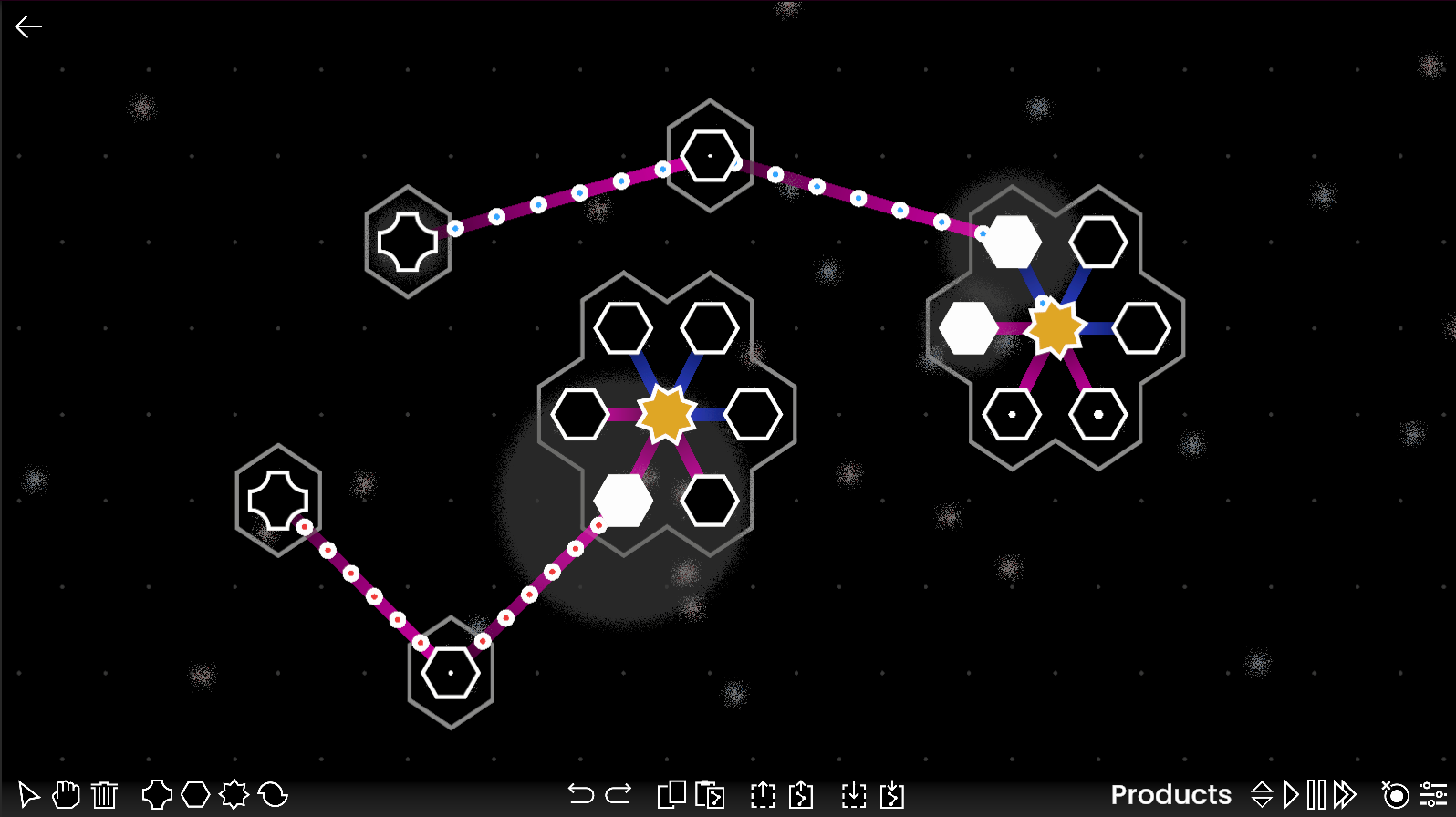
This material mapping tool is an interactive factory simulator that enabling stakeholders to visualise and map their role within Aotearoa New Zealand’s plastic supply chains. Designed for recyclers, manufacturers, and other sector players, this tool allows users to input real product and production data—contributing to the development of the first country-level simulation of New Zealand’s plastic product and waste ecosystem.
Resembling the interface of a real-time strategy (RTS) game, this mechanical, constellated map transforms industrial processes into dynamic, moving parts—spinning cogs, shifting materials, and responsive colour-coded flows. Material movements are controlled through intuitive point-and-click actions and grounded in a visual syntax of shapes, symbols, and colours.
Users can simulate specific types of plastic inputs, product outputs, and production rates, while adjusting timescales and toggling filters to visualise pre- and post-consumer activity. These features reveal critical gaps in the system—exposing hidden waste streams, missing connections, and points of leakage—helping organisations identify where improvements can lead to more circular and sustainable outcomes.

Beyond mapping current operations, the Plastic Waste Simulator encourages experimentation. Stakeholders can test speculative strategies by swapping out inputs and outputs, adjusting volumes, or reconfiguring partnerships—giving rise to new possibilities for a truly circular plastics ecosystem.
The design process involves translating stakeholder insights and x-field research into functional models, integrating existing datasets, and creating simulations that forecast the impact of various circular economy strategies to support more informed decision making across the sector.
Created in collaboration with stakeholders of the “ReShaping the Plastics NZ Ecosystem project” 2023-2028 funded by the NZ MBIE Endeavour Fund (Research Programmes) - Led by Prof Johan Verbeek (University of Aukland), Prof Deb Polson (RMIT), Prof Simon Bickerton (UoA), and Assoc/Prof Julia Fehrer (UoA)