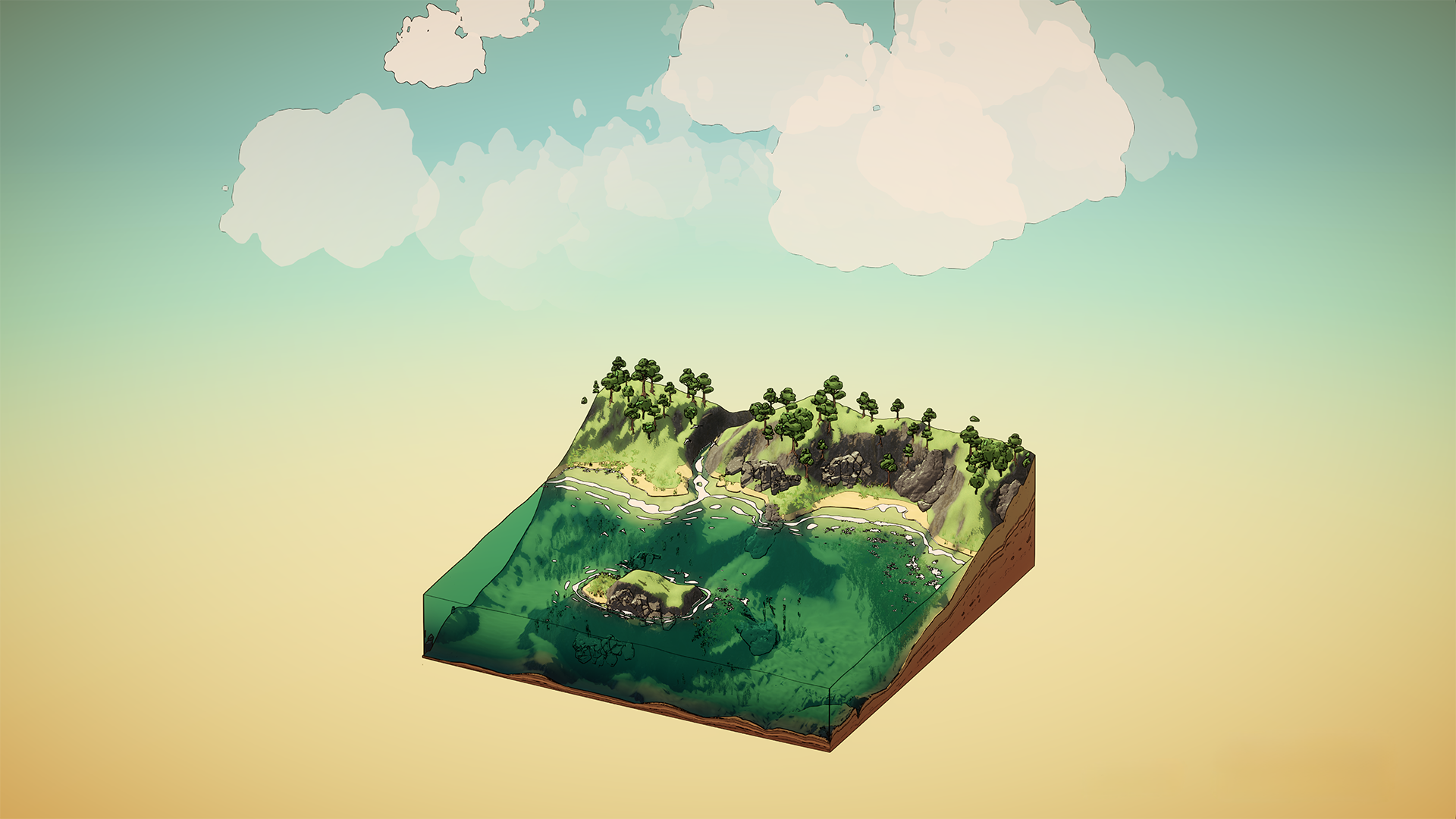
In Deep Water is a simulation/game that invites players to explore the hidden impacts of plastic pollution in marine ecosystems. Set within a digitally sculpted marine biorama inspired by the waterways of Aotearoa, New Zealand, the experience spans estuaries, coastlines, and deep ocean environments where ecological change unfolds slowly over time.
The project responds to a critical challenge: much of what scientists understand about marine plastic and microplastic pollution remains difficult for the public to access. Its causes are distributed across complex systems of production and consumption, and its impacts are often invisible, gradual, and dispersed. In Deep Water translates this research into an embodied, collaborative experience, allowing players to investigate, interpret, and make sense of environmental change through interaction rather than instruction.
More than 90% of plastics ever produced have never been recycled
Players navigate the environment using a custom-built physical control box, an intentionally unconventional interface made of dials, levers, sliders, and lights. This tactile system draws on the visual language of scientific instruments and improvised machinery, encouraging curiosity, experimentation, and shared exploration. Rather than simplifying the experience through familiar controls, the device slows interaction and distributes understanding across hands, bodies, and conversation, turning play into a process of collective sense-making.
As players move through the world, they locate and decode hidden research beacons. Each beacon reveals fragments of real scientific data: the impacts of plastic pollution on specific ecosystems, key statistics, and the work of researchers striving to mitigate harm. These encounters are designed to balance urgency with hope, presenting both the scale of the crisis and the ongoing efforts of marine scientists and plastic waste experts working toward solutions.
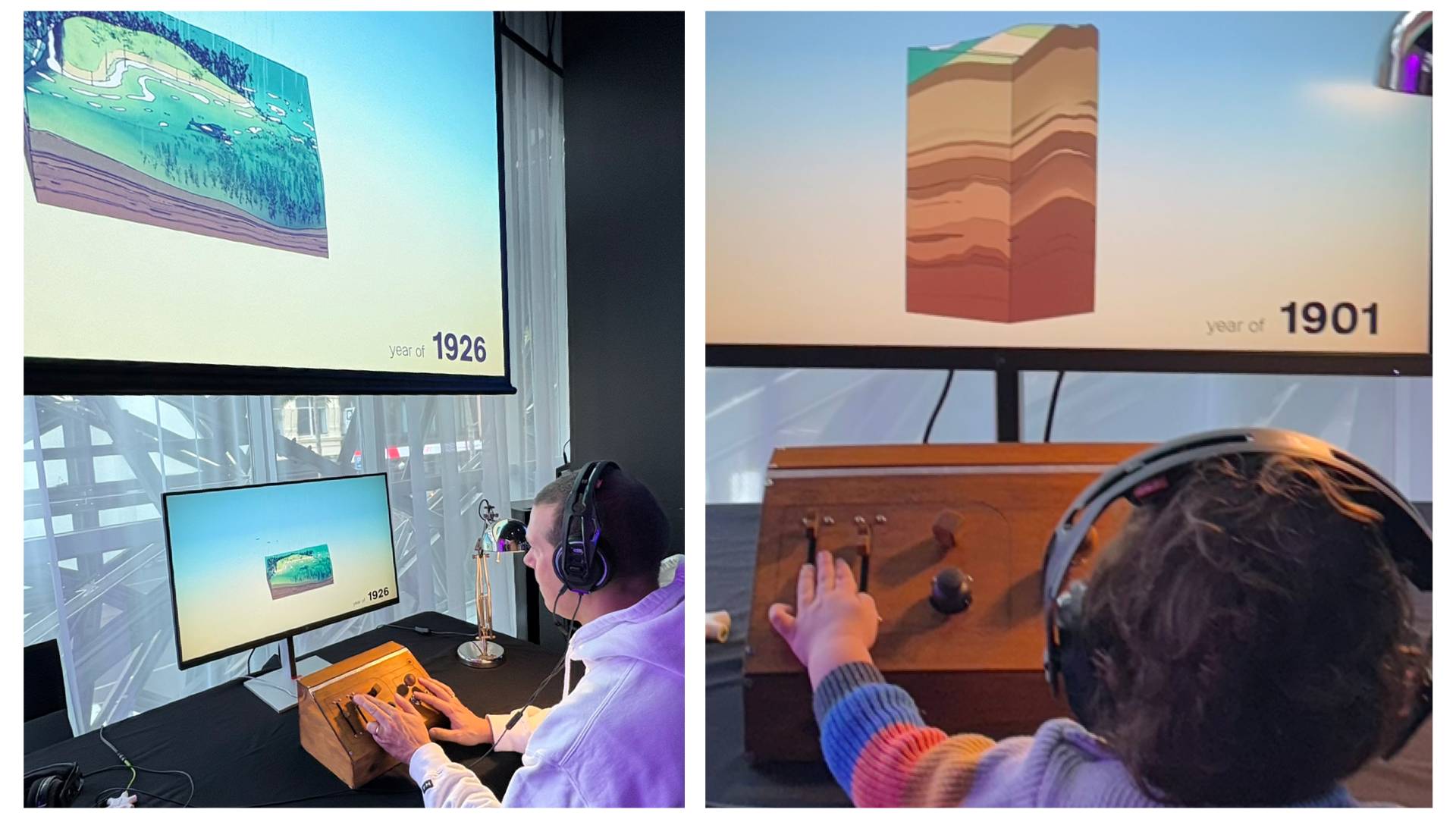
In Deep Water is part of a broader research program investigating how plastic systems might transition toward greater circularity. Within this context, the project demonstrates how games and interactive installations can function as powerful tools for translating complex research into accessible, meaningful public experiences.
Thanks to:
Dr Olga Pantos leading the Microplastics group at PHF Science, and Dr Samantha Ladewig and her team at the Leigh Marine Research Lab.
Quotes from:
World Economic Forum, Ellen MacArthur Foundation and McKinsey & Company, (2016) The New Plastics Economy: [Rethinking the future of plastics] (https://www.ellenmacarthurfoundation.org/the-new-plastics-economy-rethinking-the-future-of-plastics).
Roland Geyer et al. (2017) ,Production, use, and fate of all plastics ever made.Sci. Adv.3,e1700782 DOI:10.1126/sciadv.1700782.