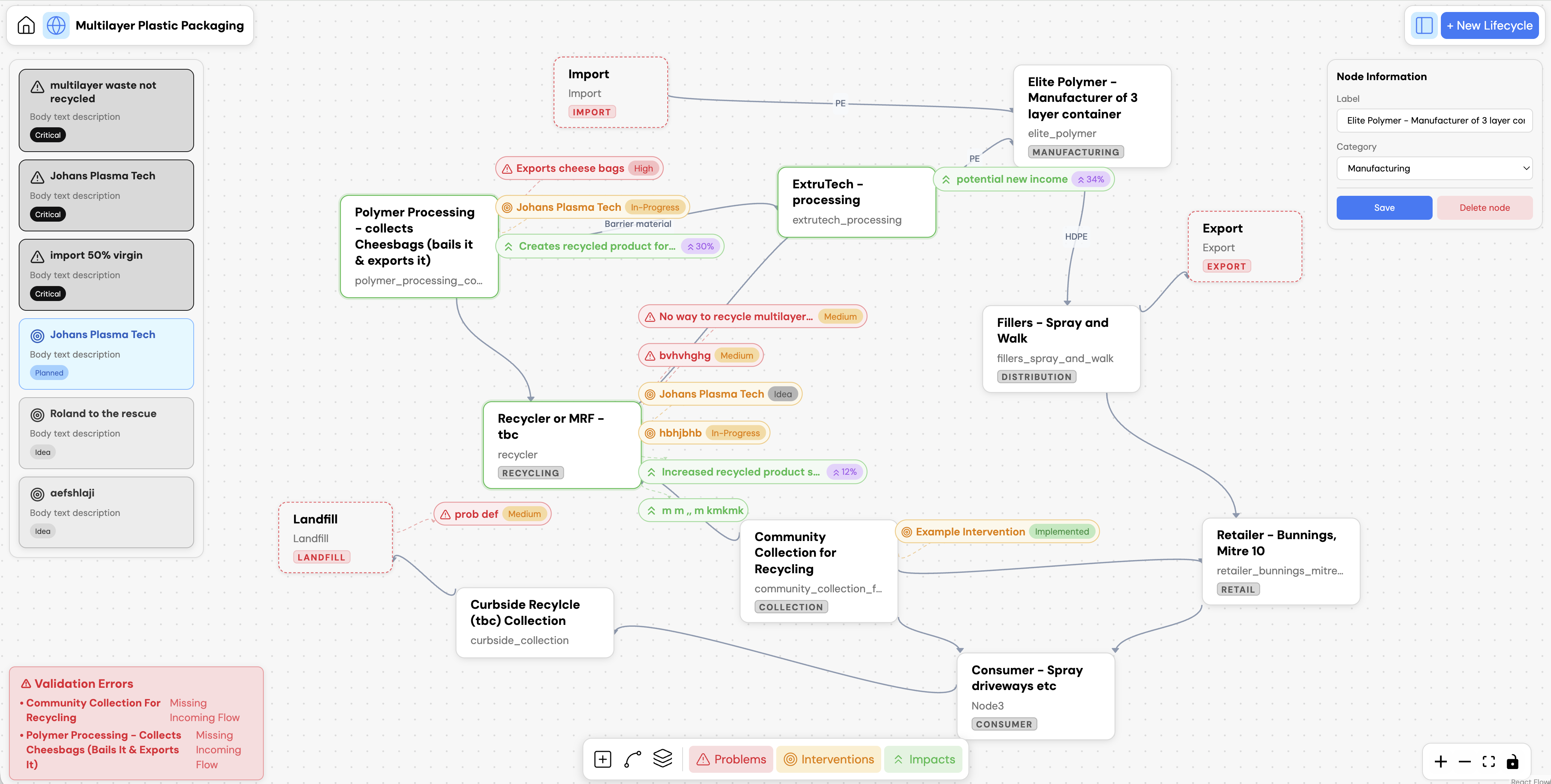
This dynamic and interactive web tool allows …
Scenario modelling, focuses on uncovering the detailed mechanics and system rules governing specific slices of the market. For example, in one scenario, we followed the lifecycle of a single plastic product, from its production through disposal, recycling, and eventual reintegration into the economy (image above). Using a combination of real-world data and modelled assumptions, we are designing interactive interfaces that allow stakeholders to explore key system dynamics, including persistent waste flows, contamination risks, import dependencies, investment bottlenecks, and regulatory leverage points.
By zooming in on discrete scenarios, we are able to surface hidden mechanics, challenge the efficacy of attempted circular interventions and test how small changes could ripple across the larger system.
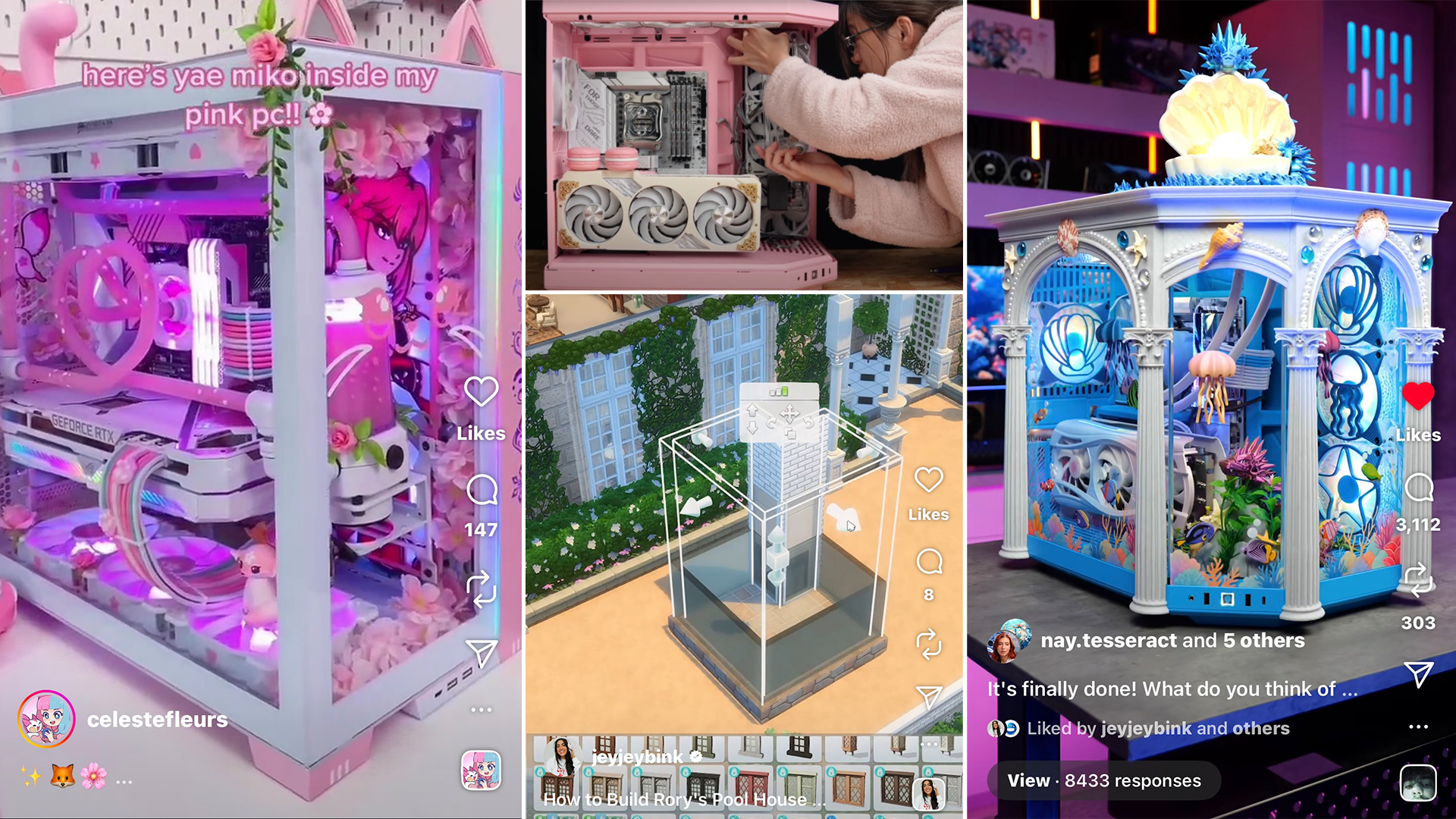 Inspiration - Works by Celeste Fleurs, TechLin, JeyJeyBink, and Nay.Tesseract.
Looping lo-fi beats accompany players as they peruse a library of candy-coloured, kawaii-inspired assets for their PC creations. Designed as a pleasant invitation to anyone wanting to build by relying on simple game controls, basic progression through object customisation and placement mechanics, and no requirement for prior technical knowledge.
The game seeks to bridge gaps between traditional masculine hobbies and feminine design by providing an accessible play space free from financial and gendered barriers in the hopes of encouraging a more diverse community of practice in the cultural ecosystems of PC building.
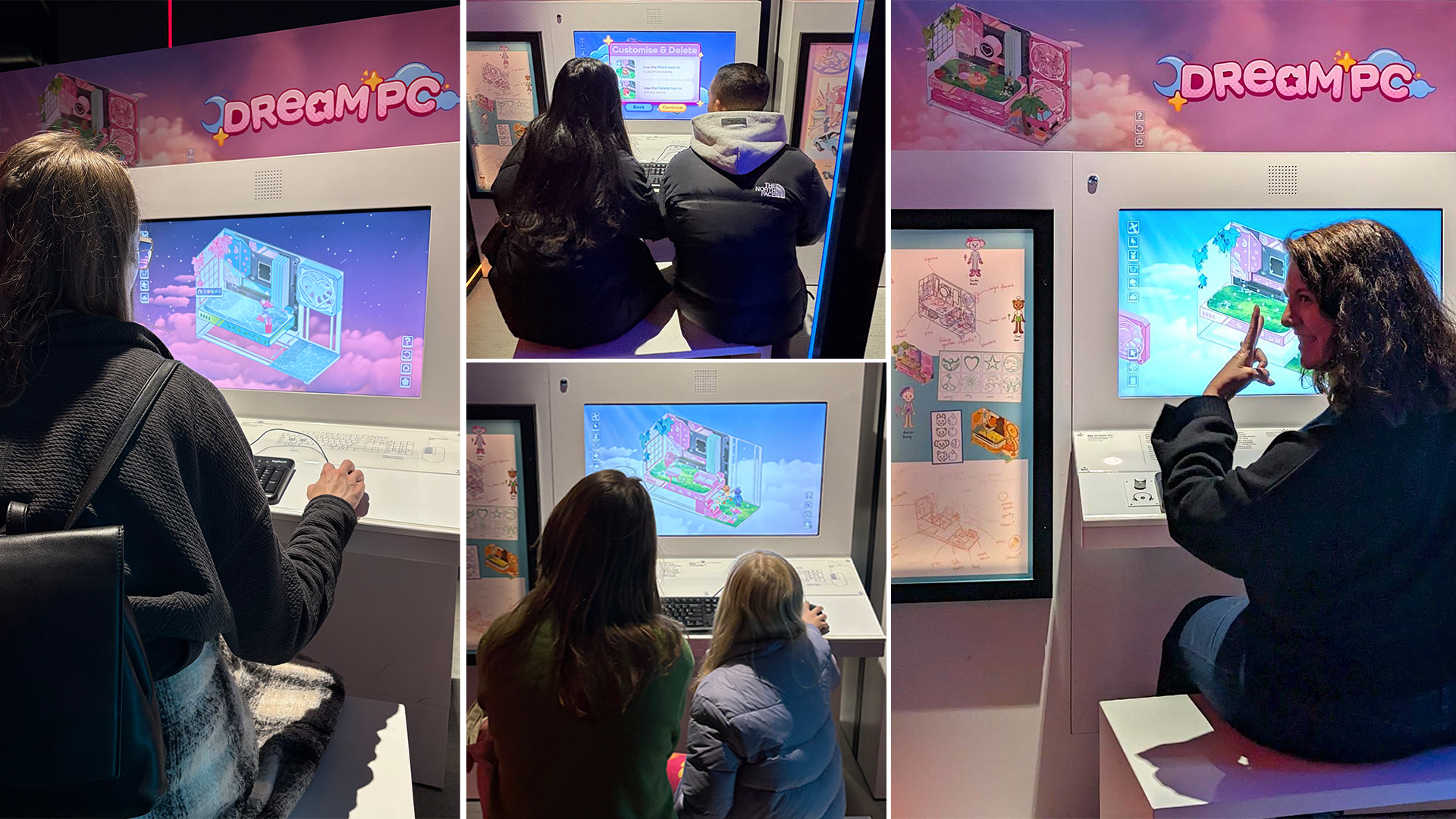 Players interacting with the installation at ACMI.
We tailor designed Mapping Workshops that invited key stakeholders (on November 2024) to map specific product cycles that are currently the closest to circularity within their market context. Then we asked them to complete 3 layers of analysis:
- identify (scrutinise) remaining limitations (waste leakage, virgin/recycled plastic imports)
- plot potential (practical to aspirational) interventions (technical innovation, regulation, business model, re-designed product…)
- describe potential impact on the scenario and broader ecosystem (financial, service, expertise…)
We have since analysed all the map data and insights, calibrated across all maps, define custom CE intervention configurations, digitsed the maps, formulated digital mapping templates. Currently developing maps into simulation environments, to develop interactive, visual tools that allow stakeholders to experiment with interventions under various conditions. The simulation is designed to allow participants to adjust parameters such as local vs. centralised recycling capacity, the presence or absence of regulatory incentives, or the design of extended producer responsibility schemes, and observe the simulated outcomes on material circulation rates, economic returns, environmental impacts, and stakeholder cooperation.