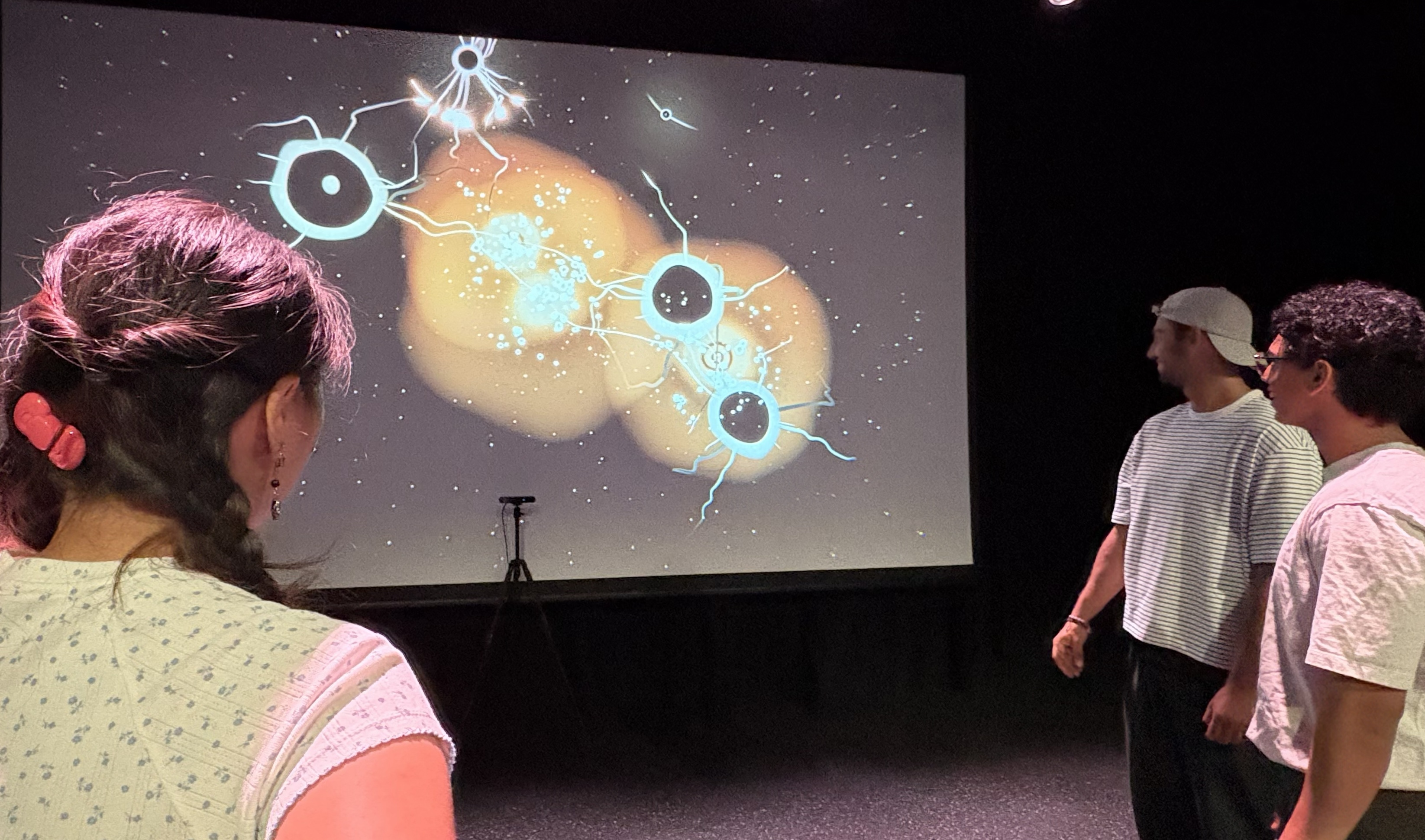
Synaptic Bloom is a large-scale interactive audiovisual installation that transforms the movements, proximity and stillness of strangers into a living network of luminous, organic forms. Inspired by microscopic recordings of neural activity and cellular connections in the brain, the work invites visitors to discover how their individual presence and collective behaviour can generate extraordinary visual and sonic experiences.
Combining a real-time game engine, ZED camera-based body tracking, dynamic animation and immersive responsive sound, Synaptic Bloom transforms a gallery, foyer or public space into an interactive environment. Visitors’ positions are continuously tracked and translated into abstract, neuron-like forms projected at architectural scale. As people move, pause and gather, delicate tendrils emerge, connections form, and intricate networks begin to grow across the screen.
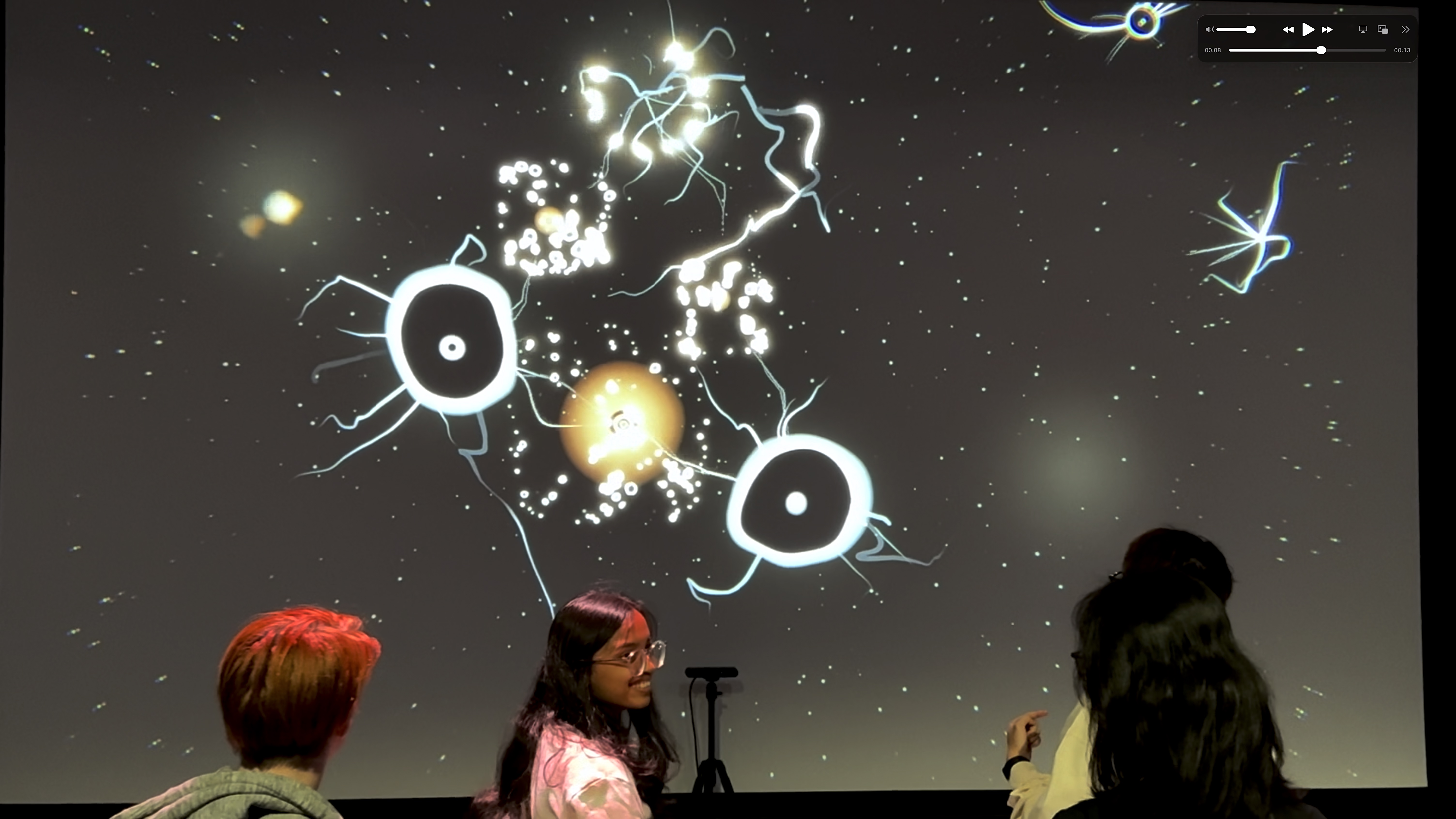 Synaptic Bloom makes the invisible relationships between strangers visible, creating moments of curiosity, anticipation and collective delight.
*Banner image above: Synaptic Bloom at ACMI Audience Lab, Melbourne, March 2026. Presented as part of ACMI and RMIT’s public showcase of experimental interactive works, this event marked the first public installation and testing of Synaptic Bloom’s initial design iteration. Visitors explored how proximity and collective stillness could generate luminous, neuron-like connections across a large-scale projection, transforming strangers into unexpected collaborators through playful interaction.
The unusual challenge is that progress requires people to slow down.
Unlike conventional games that reward speed, competition or increasingly frantic activity, Synaptic Bloom encourages visitors to cooperate through proximity, patience and shared stillness. When strangers stand close enough together and remain still for a sustained period, their individual forms begin to connect. These connections expand into increasingly complex networks, accompanied by evolving animations, light and sound.
As more participants join and maintain their collective stillness, the network becomes richer and more elaborate. Eventually, when sufficient connections have formed, the entire environment undergoes a dramatic transformation. A crescendo of animation, light and immersive sound signals the emergence of an entirely new visual world, inviting participants to begin forming connections again.
These transitions are deliberately spectacular and deeply satisfying. They reward not individual achievement, but the collective effort of people who have quietly negotiated an unfamiliar form of cooperation.
Turning Awkward encounters into beautiful moments
Synaptic Bloom was developed by the Games of Consequence Lab as an experiment in how gaming technologies might encourage unfamiliar people to interact in unexpected, joyful and sometimes surprisingly intimate ways.
Public interactive installations often invite people to move, gesture, compete or perform. Synaptic Bloom explores a different possibility: what happens when an interactive experience asks strangers to be still together?
The work creates a playful excuse for people to acknowledge one another, negotiate their physical proximity and become thoughtful collaborators. What begins as curiosity about an unfamiliar digital environment can develop into a shared experience of patience, anticipation, discovery and delight.
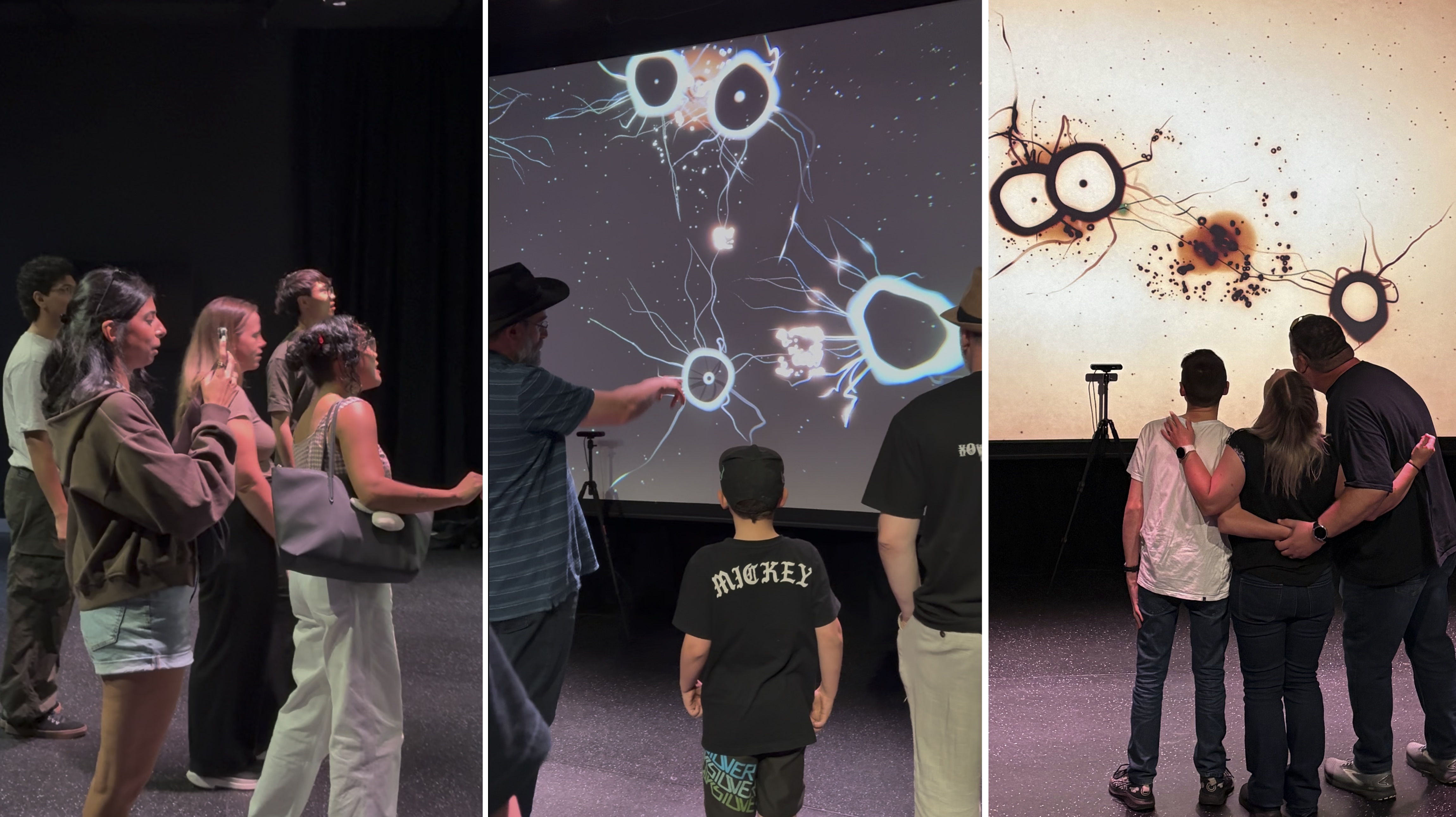 Three ways to play, connect and cooperate. Synaptic Bloom encourages unexpected interactions between strangers in gallery spaces—from curious observation and playful experimentation to collective stillness and moments of physical closeness.
These encounters only happen in this space encouraged by the work, demonstrate how interactive installations can transform exhibition spaces into places of joyful social connection. The work also offers museum and gallery curators an exemplar of how collaborations with local creative practitioners can produce ambitious, original experiences that expand the possibilities of public engagement, without relying exclusively on established international artists and studios.
During a recent presentation at ACMI’s Audience Lab, one group of visitors spontaneously embraced as their collective stillness triggered a spectacular transition between worlds. One participant exclaimed:
“I guess this makes us all family now.”
It was a delightful, unscripted moment that captured the project’s central ambition: to use technology not simply to entertain individuals, but to create meaningful opportunities for connection between people who might otherwise never interact.
Synaptic Bloom demonstrates how game engines, sensing technologies and interactive art can be brought together to reconsider the behaviours we encourage in shared spaces. Rather than demanding attention through speed or spectacle alone, the installation makes room for contemplation, cooperation and the pleasure of creating something beautiful together.
Ultimately, the work asks a simple question: Can an interactive world encourage us to become more attentive to one another in the real one?